

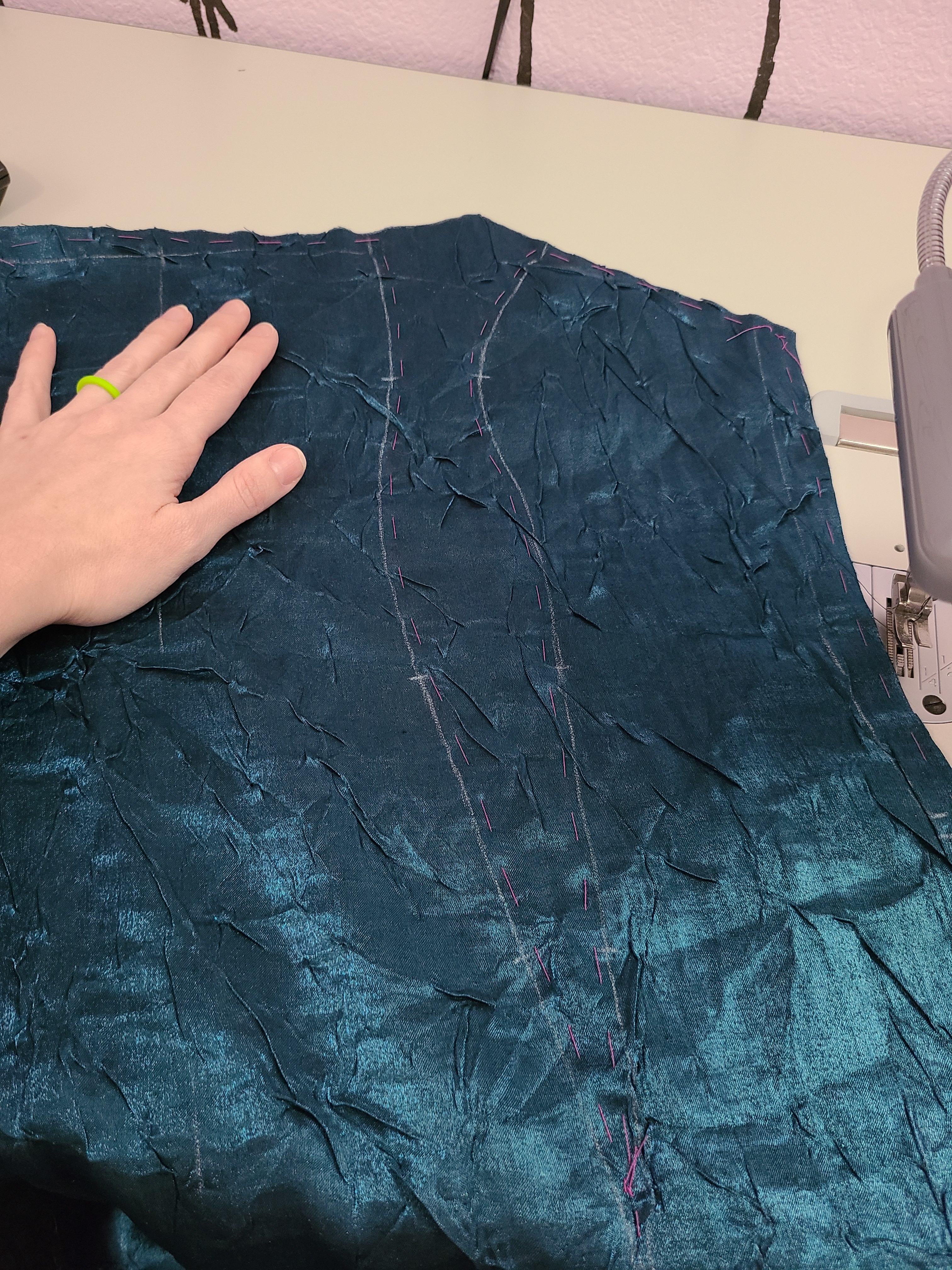
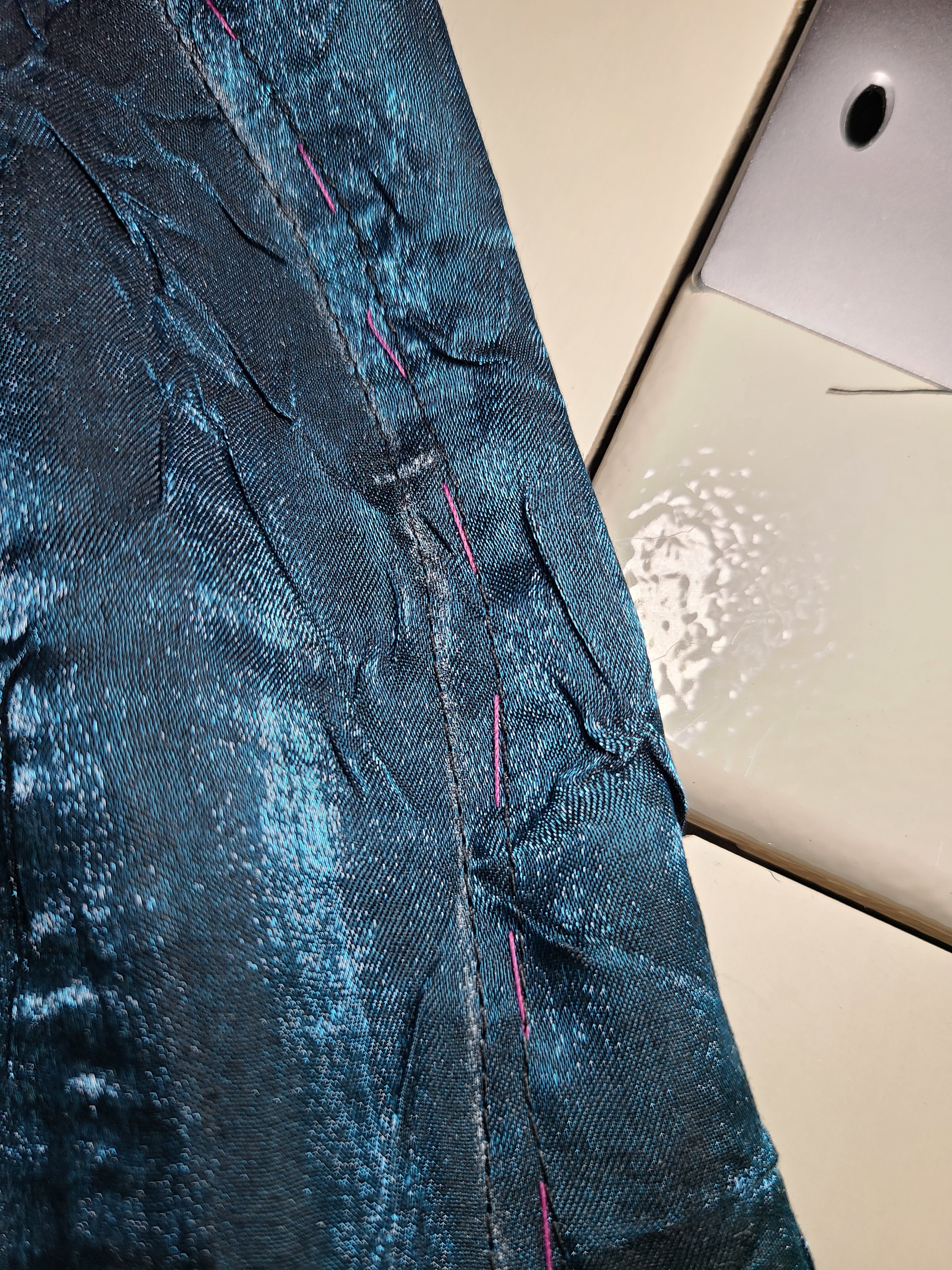
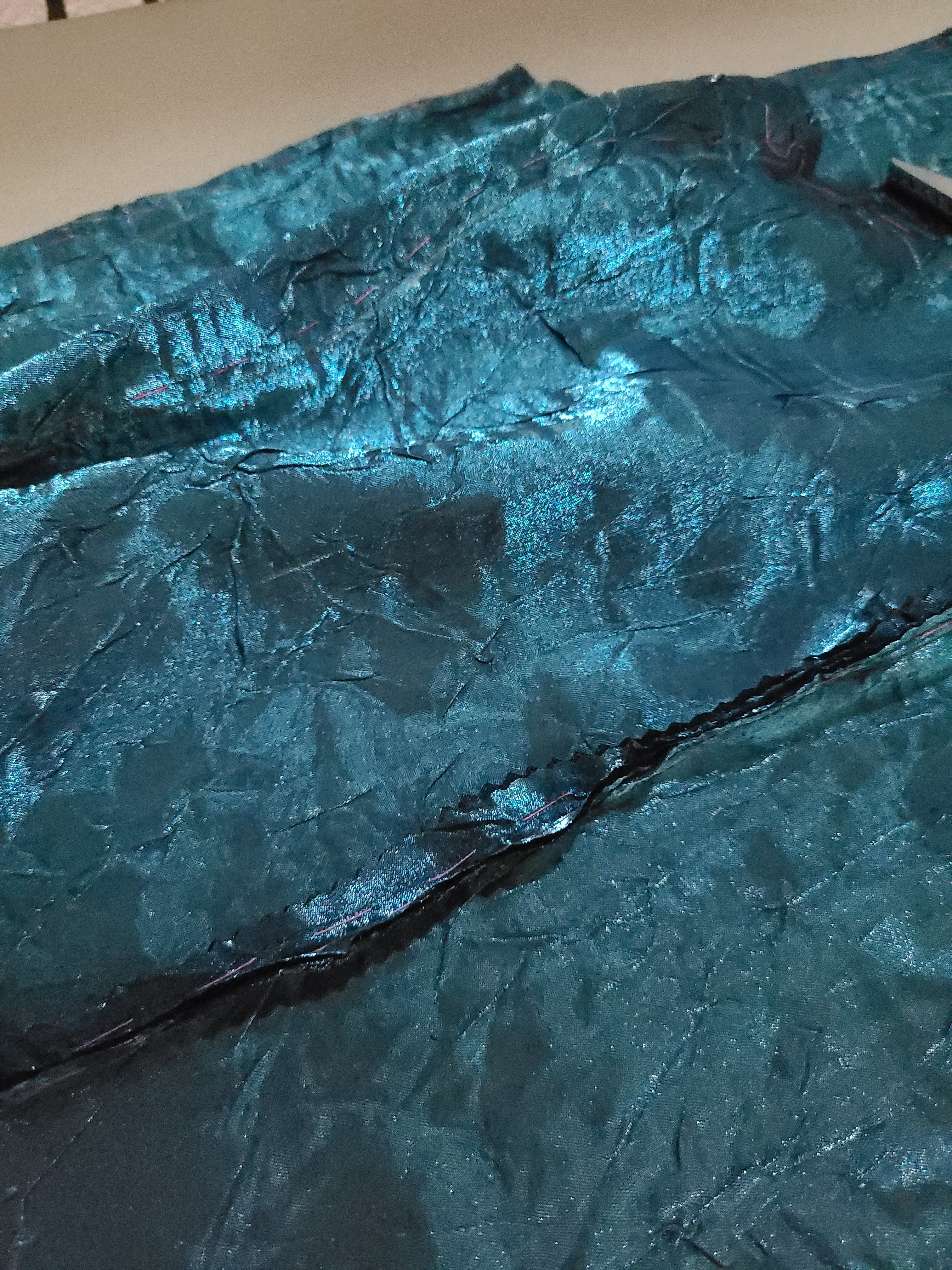
The pattern I'm using for my dress has large curvy princess seam "darts" that end up being trimmed down to regular seam allowance after stitching. Since I custom fit the pattern using the foundation I made first, mine are curvier than what was originally drafted.
The handbasting of the marked lining layer to the outer fabric layer makes it easier to sew them. (I did reinforce the handbasting with machine stitches inside the darts knowing I wanted a line of stitching to keep any possible fraying of the cut edges from getting too close to the actual seam.)
Since my altered pattern had been traced onto thicker paper with seam allowances removed, I cut the stitchlines of the darts on the paper to make tracing onto the fabric easier. I used a white Prismacolor pencil (chalk would never last long enough with handling).
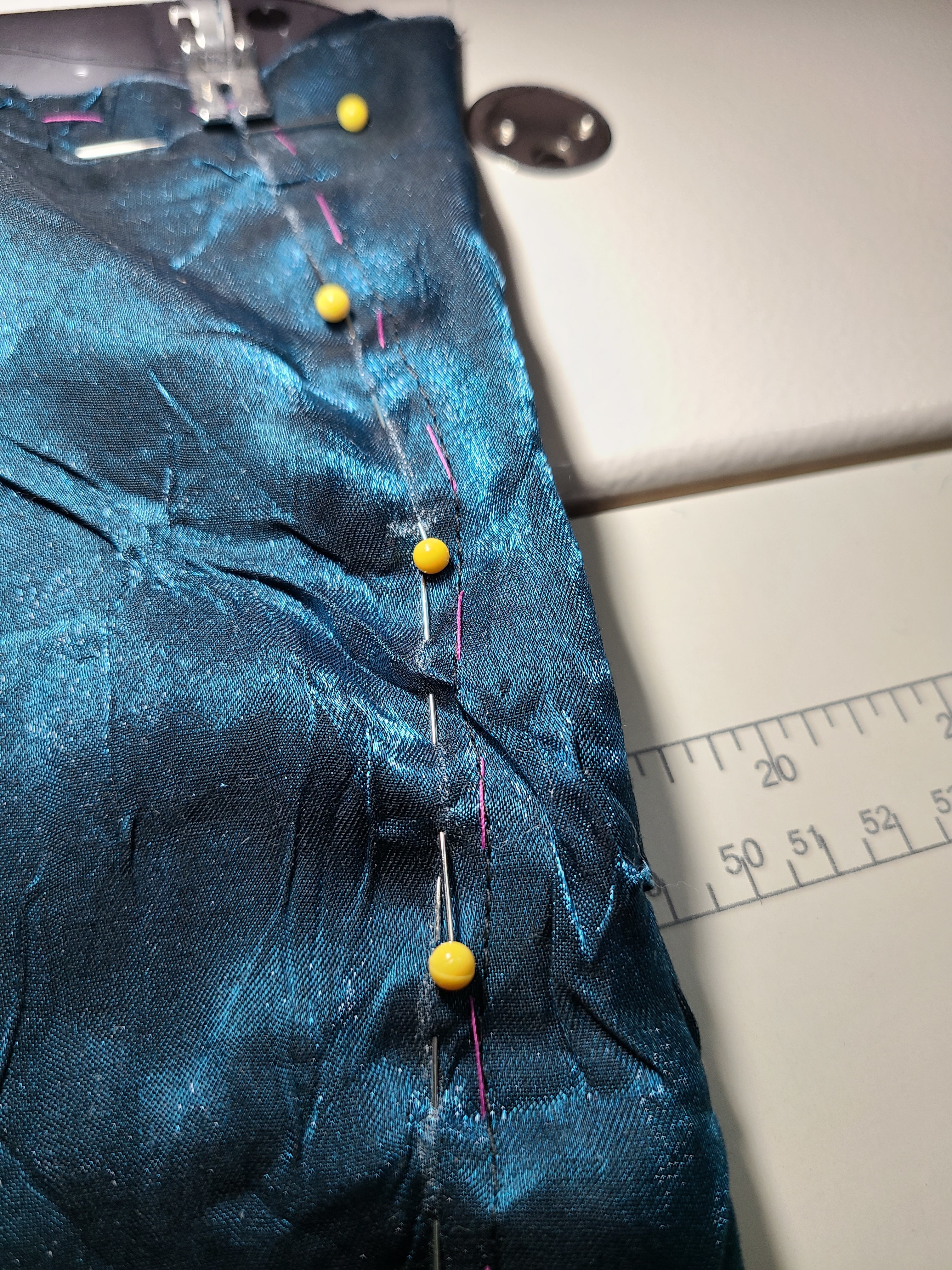
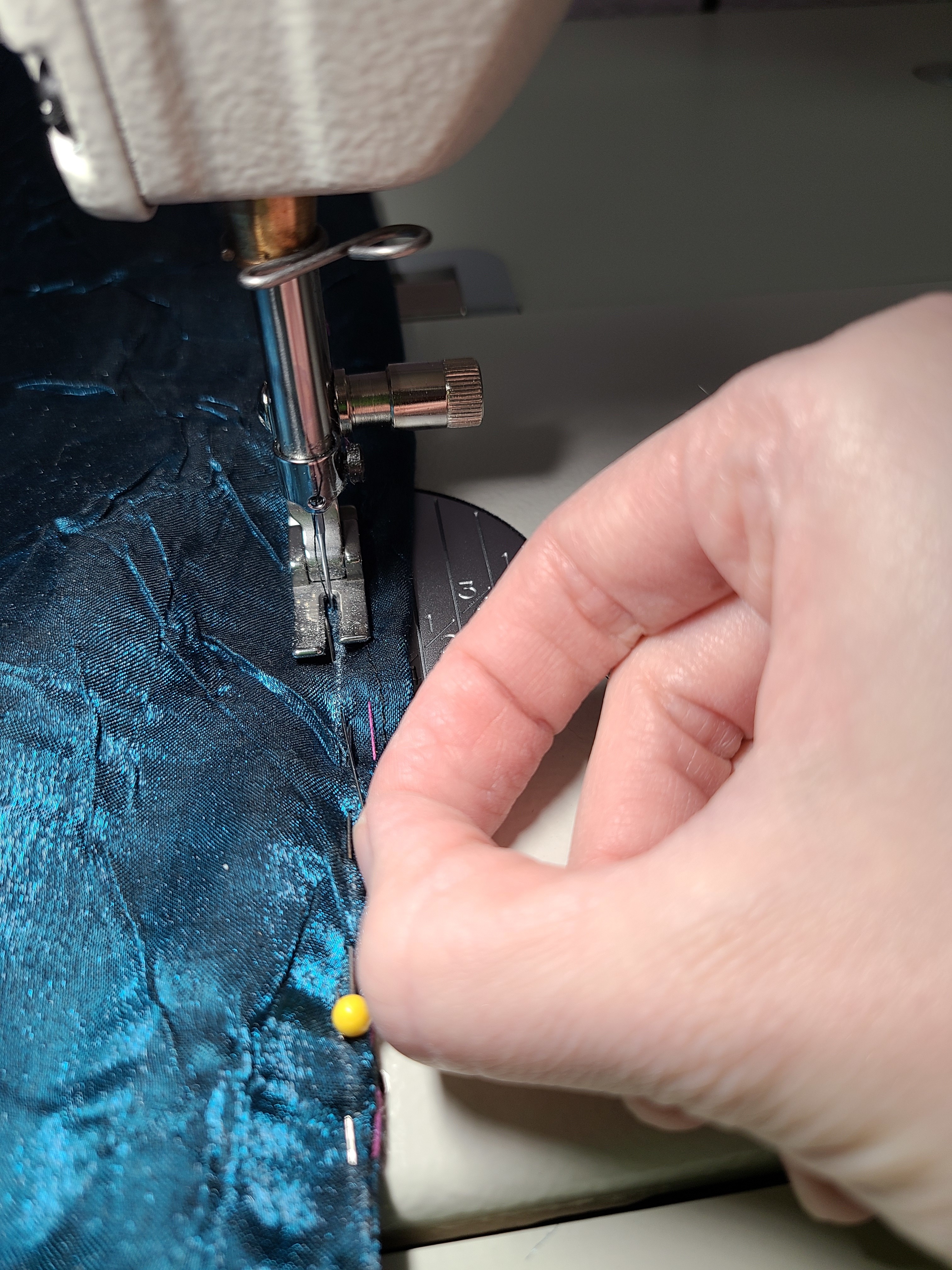
I always sew darts by matching ends and any middle notches and then weaving pins through marks on both sides of the dart. Then I hold each pin in place as it gets close to the presser foot and allow the machine to pull the fabric off the pin. It allows for a lot of extra control and precision, and if I've pinned properly, I stitch perfectly through the lines on both sides.
Tomorrow when I have better lighting, I'll press everything open and cross-stitch the seam allowances to the inside layer of fabric to control the puffy tendency of this fabric.
#Butterick4731

I spent the day priming things for paint and then I remembered to shoot a quick video. #SewingStudioBuild
I started cutting all the edges while Janet was away yesterday morning. When she got back after lunch, she pulled out a roller and started filling in. I'll put a pic below in the comments. #SewingStudioBuild
We broke for lunch and then came back with a portal ac unit plugged in to an extention cord from the house. Can't wait until they finished hooking up all the electrical and we have the mini split cooling the room for us - it was stupid humid today! #SewingStudioBuild

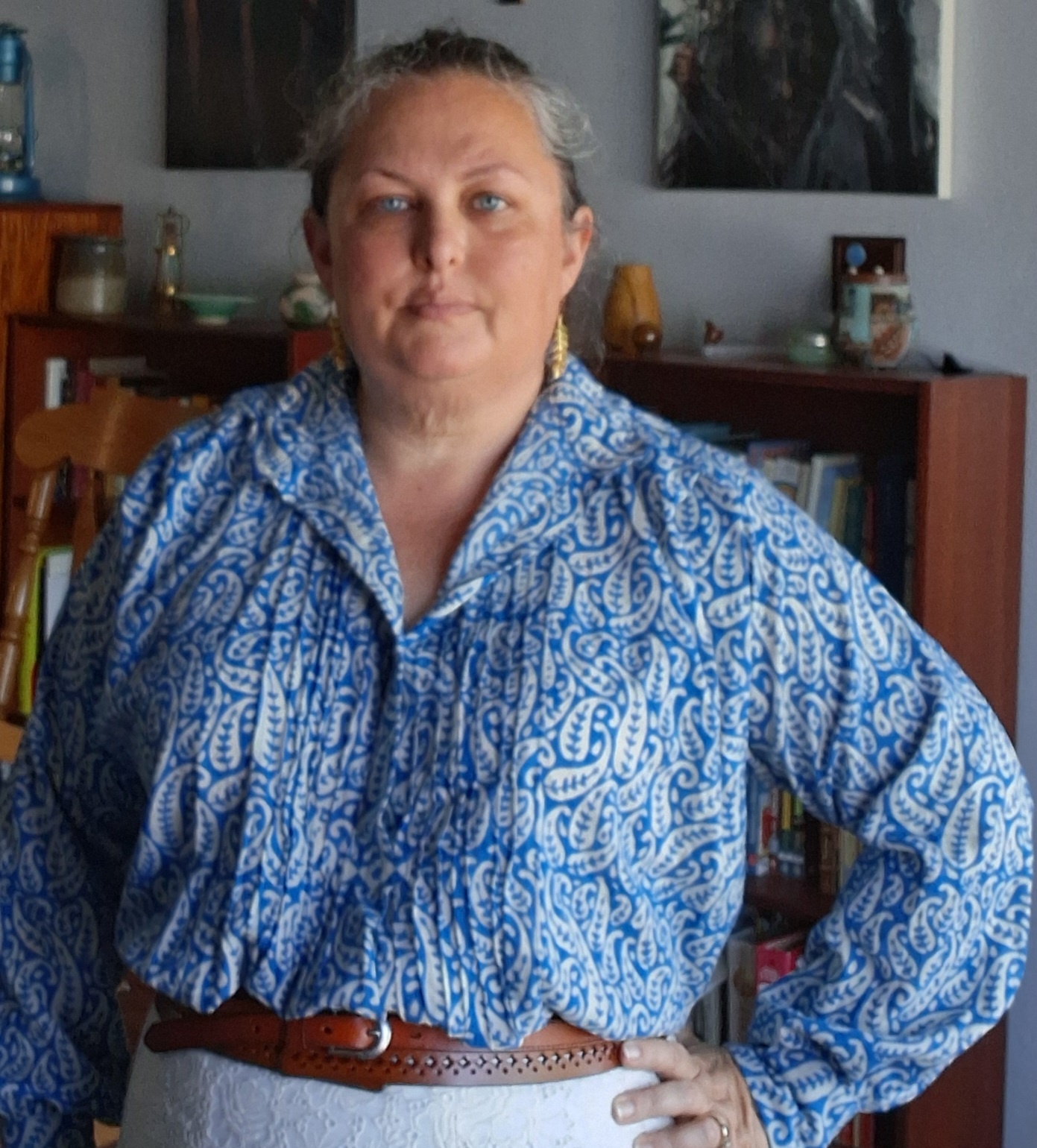
YIKESSSSSSSSSSSSSS....... Folkwear Croatian Shirt Faillll...
I thought, "This shirt has no fitting whatsoever. Surely I don't need to muslin this, just use my measurements... " HA.
I'm sending you to the link b/c I think you should know about patternreview.com if you don't. But yikes.
https://sewing.patternreview.com/review/pattern/208009
Oh, I got the fabric from a deadstock place in Singapore (which ickily shipped from China) and I'm 75% pleased with that. The fabric is super comfy and soft, and it showed up quickly... but there were a couple of holes. Bubbo, fwiw.
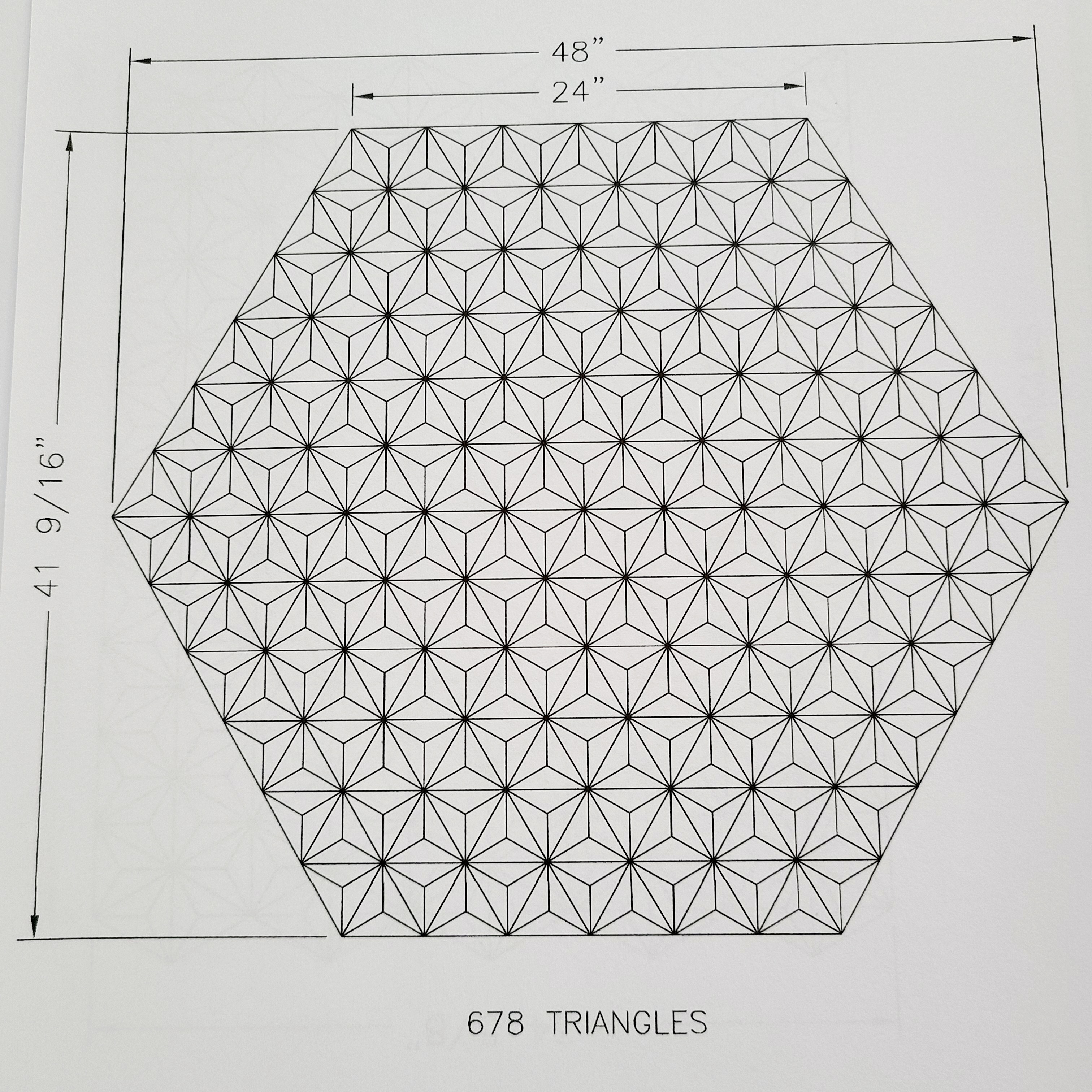
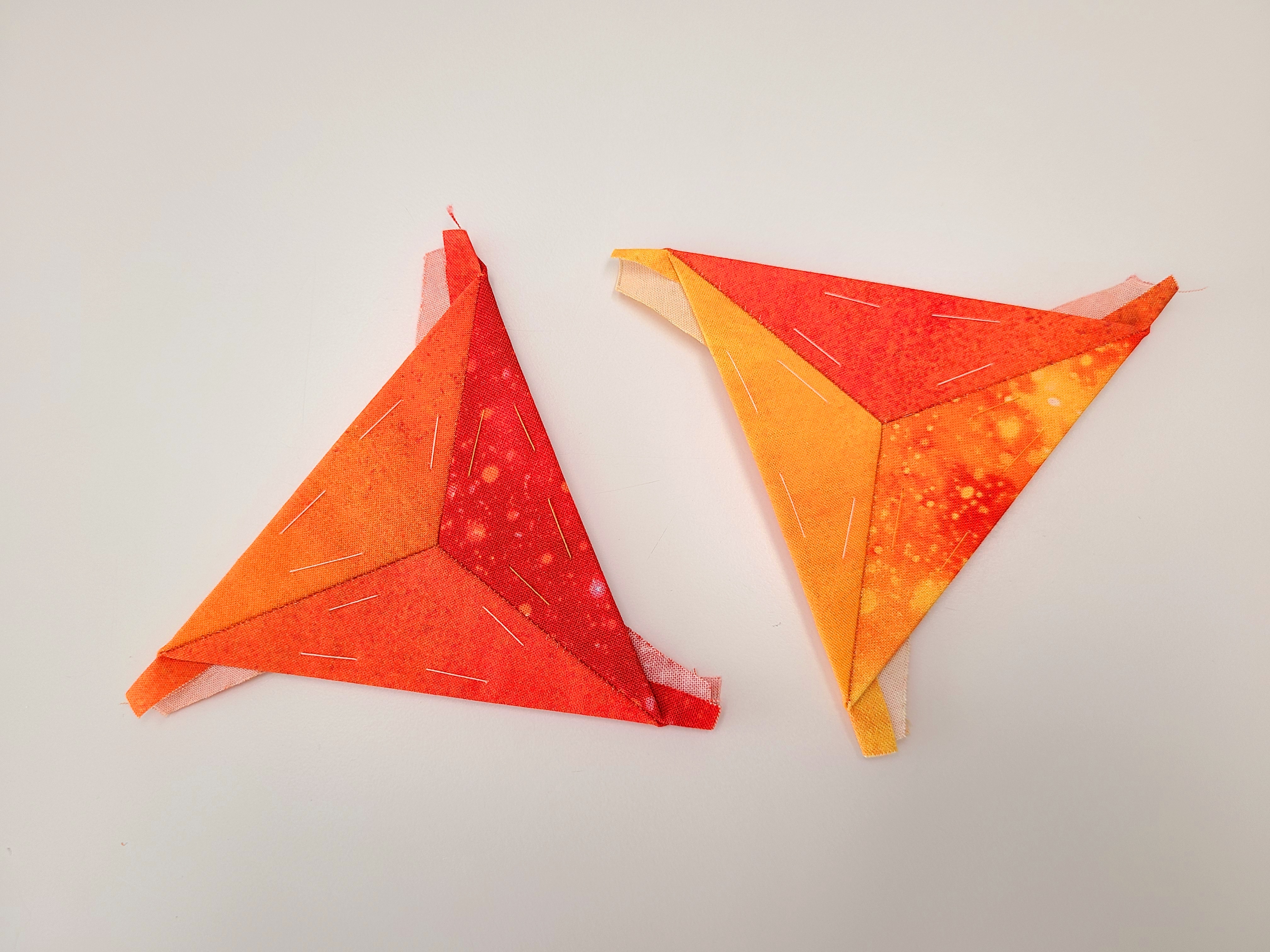
So this is my plan for all those fabric covered triangles. Make eleventy million little triangles into a million slightly bigger triangles. Then make those into a bunch of hexagons and put them all together into a giant hexagon.
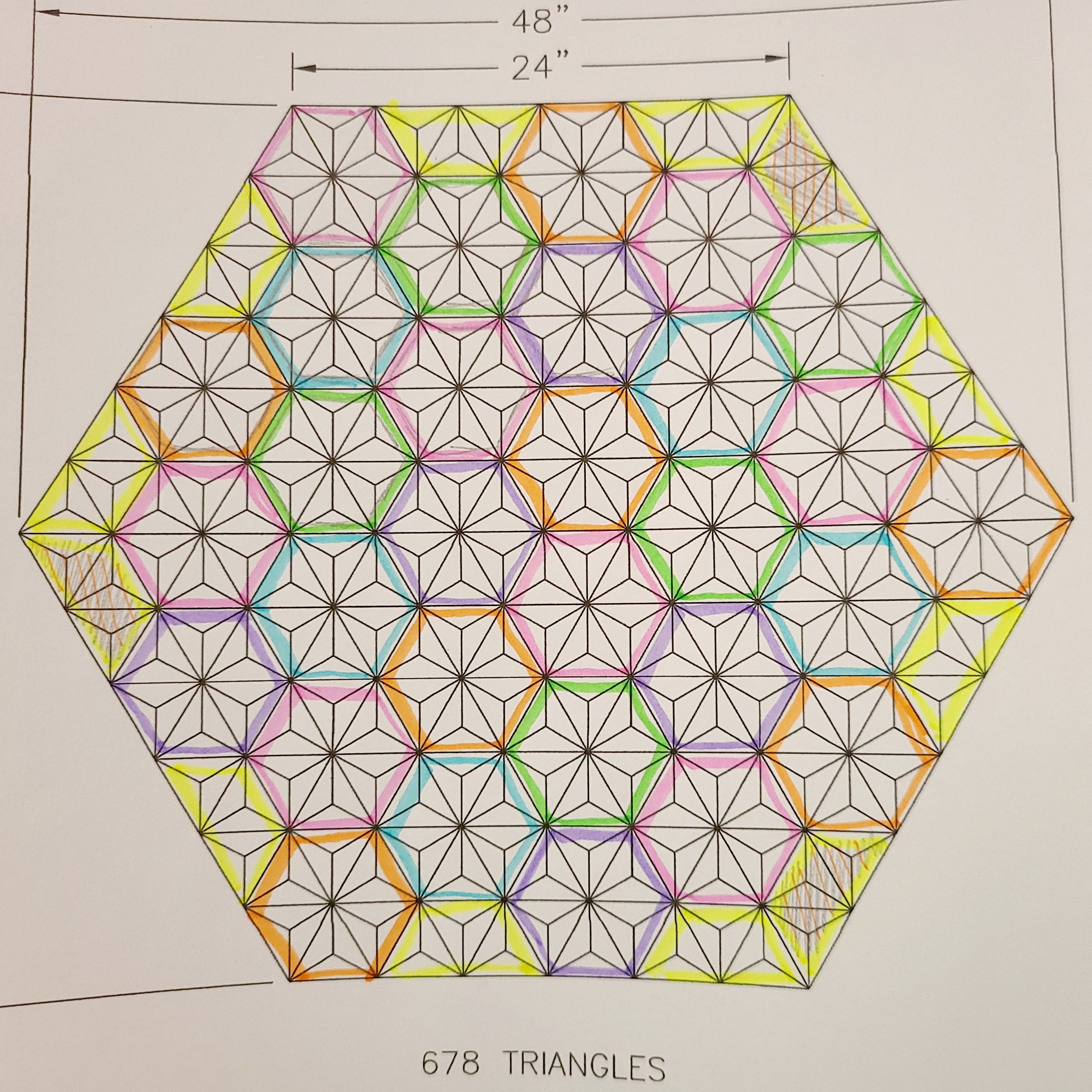
The last photo is my "map" once I've made all the triangles. Colored outlines are just so I can see the hexagons because I'll get better joins at the points if I assemble like this instead of long straight runs of rows of triangles. Plus it will be easier to hold smaller sections as I hand-stitch.
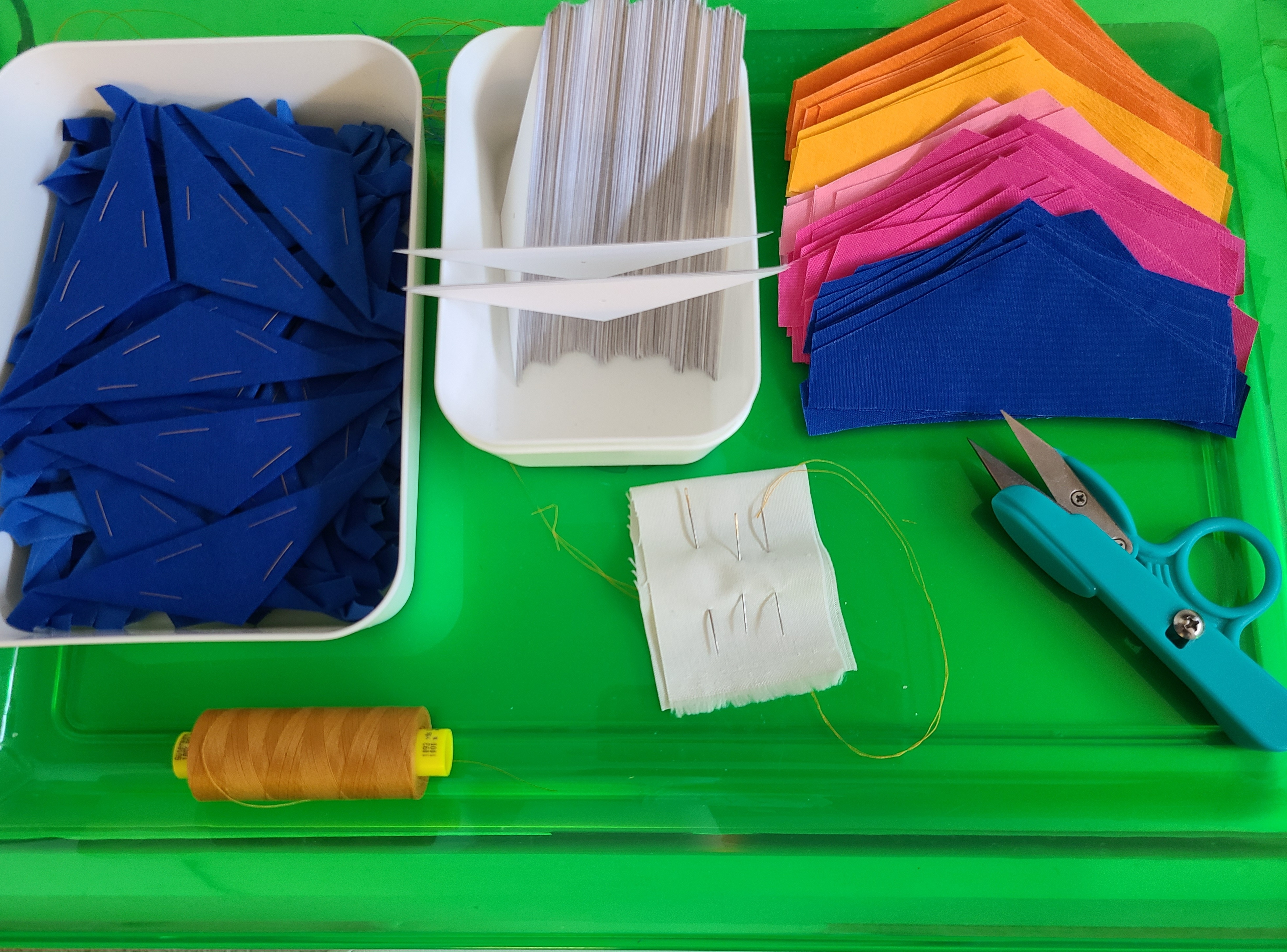
I think I only have about 150 papers left to cover with fabric, but I need to start laying what I have out to see if I need any specific colors (maybe some lighter highlights).
Any guesses what my inspiration is? I'll put the answer/photo in the comments.
#epp